
Forest Park City Directory Holdings
Forest Park does not have a verified, stand-alone city directory run posted online. The reliable starting point is the Cincinnati & Hamilton County Public Library system, especially its Genealogy & Local History Department and Digital Library. A directory published before Forest Park homes first went on sale cannot identify a Forest Park household. It can still help with the predecessor geography, nearby roads, builders, and names connected with northern Hamilton County. For a household search, the useful volume must be dated after the city's development began and its coverage must be checked in the actual book or catalog record.
| Collection | Years | Where Held | Access |
|---|---|---|---|
| Williams' Cincinnati Directory | 1948 verified digitized example | CHPL Digital Library and Genealogy & Local History | Online item; use for method and predecessor-area context. |
| Forest Park-inclusive city and reverse directories | Late 1950s onward requires catalog confirmation | CHPL catalog, Genealogy Department, and possible library databases | Ask staff to confirm the exact year and geographic coverage. |
| Hamilton County Probate Archive | Earliest records from 1791, category dependent | Hamilton County Probate Court Archive Search | Online archive route, with counter or request follow-up for missing public material. |
| Ohio Death Record Index | 1913-1944 and 1954-1970 | Ohio History Connection | Online index lead, not a current certified-copy service. |
| Newspapers and obituaries | Database and subscription years vary | CHPL research databases and local newspaper archives | Use the catalog or library staff to identify the relevant run. |
The documented gap is important. No authoritative online shelf list was located for every Forest Park-inclusive Williams or reverse-directory year. That is not proof that a volume is absent. It means the next step is a title, year, publisher, or criss-cross catalog search and a Genealogy desk check, rather than inventing a date range from a nearby Cincinnati volume.
Forest Park Directories After 1956
Forest Park's directory story has a clear date boundary. Warner-Kanter opened homes in the C section in March 1956, after acquiring former Greenhills and Resettlement Administration acreage. A 1950 population census or a 1948 directory concerns the predecessor rural or Greenhills-area setting, not a later incorporated Forest Park household. Village incorporation followed in 1961, and city status came in 1968. This postwar buildout makes subdivision plats, developer conveyances, tax transfers, and catalog-confirmed 1960s and 1970s volumes more useful than a pre-city alphabetical listing.
County records preserve the longer frame. Probate Archive categories can begin in 1791, and historic court and land material can describe people or land in the area before Forest Park existed as a municipality. Keep the municipal history and the land history separate in notes. The same family name or road reference can appear on both sides of the 1956 break without proving that the later household occupied the same place.
- 1791: Hamilton County Probate Archive reports its earliest category-specific records.
- 1948: the digitized Williams' Cincinnati Directory provides a verified predecessor-area example.
- 1956: Forest Park's first homes opened in the C section.
- 1961 and 1968: the community became a village, then a city.
- 1969 and 2001: Parkdale Branch opened, then was renamed Forest Park Branch.
Note: A later directory must still be checked for its stated city and street coverage before it is used as Forest Park evidence.
Forest Park Directory Help at CHPL
The nearby Forest Park Branch is a practical first contact for a directory question. It is at 660 Northland Blvd., serves Forest Park, Springdale, and nearby communities, and provides research-database links plus staff contact. The branch does not stand in for a complete historical directory shelf. For deep directory, newspaper, obituary, and microfilm research, the handoff is to CHPL's downtown Genealogy & Local History Department, which maintains the countywide research focus.
The CHPL Digital Library and the classic catalog support a useful request: give the person or historic address, the desired year, the publisher if known, and whether an alphabetical or reverse volume is needed. Search terms can include Forest Park, Parkdale Branch, Greenhills, Springdale, a subdivision name from a deed, and a historic street spelling. Those are catalog aids, not proof that a book covers an address.
The Forest Park Branch page provides the local service details that make an in-person or staff-assisted search possible.
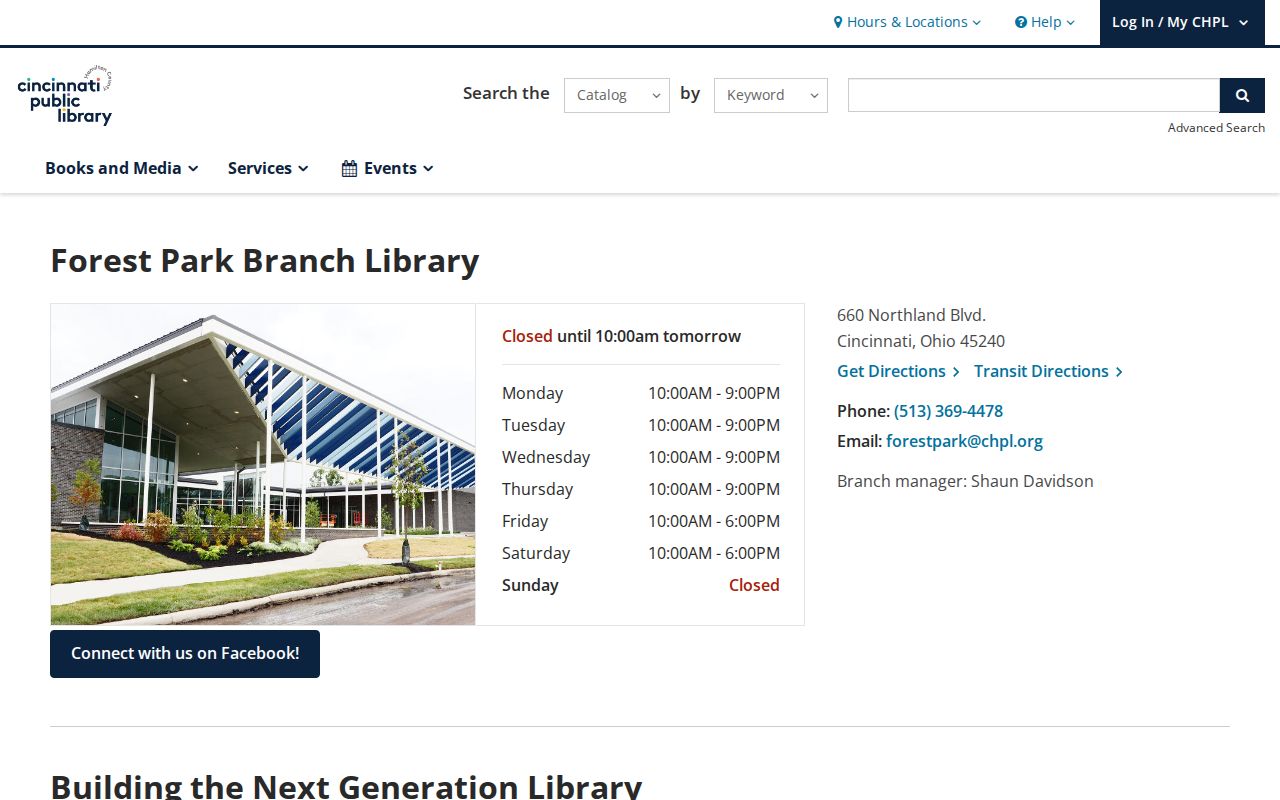
Use the branch as a referral point, then retain the repository, collection title, volume year, and page or image locator for any historical entry.
Reading Forest Park Directory Entries
Each city directory entry must be transcribed as printed. In a Cincinnati directory, the usual architecture pairs alphabetic personal or business listings with a street guide that organizes addresses by street and number. A printed name, street address, occupation or organization clue, and spouse or widow shorthand may appear, but a field missing from the entry must stay missing in the notes. A business address, an owner, and a resident are different roles. The volume's title page, publisher, year, and abbreviation legend are part of the evidence.
| Printed name form | Record initials, spelling, and surname exactly as the volume presents them. |
|---|---|
| Street address | Use the printed number and street, then compare it with the volume's street guide. |
| Occupation or organization | Use only when the volume displays it; it can be a clue, not an identity conclusion. |
| Spouse or widow notation | Interpret it only through that volume's own abbreviation key. |
| Owner or renter mark | Do not assume one exists. If shown, preserve the symbol and its legend before expanding it. |
- Criss-cross directory
- An address-to-name companion volume, when one exists, used after the historic street form is established.
- Householder index
- A name-oriented arrangement that can help locate a household entry before checking the street guide.
- Abbreviation key
- The legend in the actual volume that explains period shorthand. Its meanings can vary by year and publisher.
Forest Park Directory Census Timing
The federal population census is released on a 72-year cycle. In 2026, the most recent full public population census is 1950, which predates Forest Park's first home sales. Census pages can therefore help reconstruct predecessor geography, but they cannot be treated as a local Forest Park household list. For the city's early decades, catalog-confirmed directories, plats, deeds, tax transfer records, newspapers, and City material often carry more direct chronological value.
A directory year should be paired with a source that measures a compatible event. A deed or Auditor transfer can test a property connection. A Probate estate or an obituary can clarify a family-history endpoint. The Ohio Department of Health Vital Statistics channel serves statewide vital-record questions, but a life event is not evidence of a current address. For older death leads, Ohio History Connection's limited date-range index is an index, not the certificate itself.
The statewide vital-records page is a useful route when a documented life event needs a custodian, signed application, or statutory program rather than a directory inference.
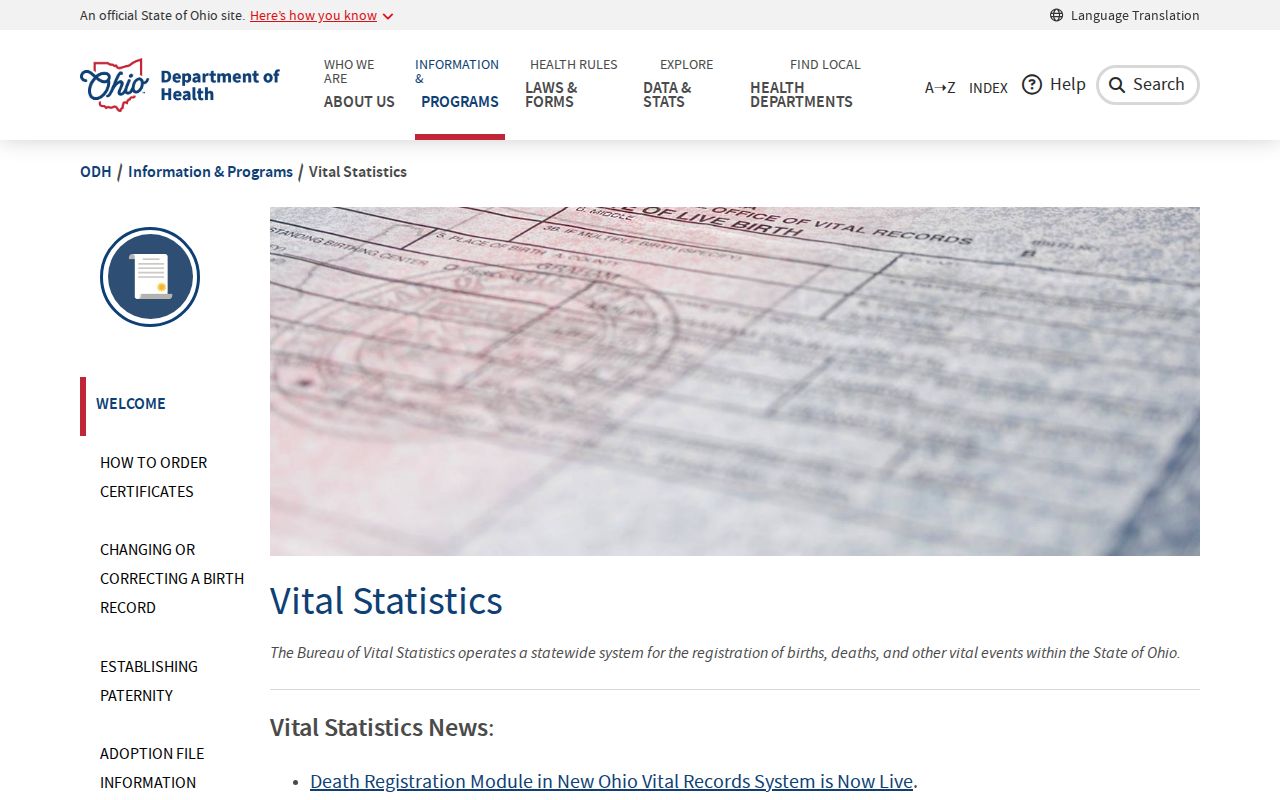
Keep a directory page and a vital-record request in separate notes, then connect them only through compatible names, dates, or record identifiers.
Tracing Forest Park Directory Households
Start the household trail with a catalog-confirmed post-1956 volume. Search the alphabetical listing for the exact name form and the street guide for the address form, then record the page and any abbreviations. Check the title page's stated coverage before treating the address as Forest Park. A reverse or criss-cross volume is preferable for address-first work, but only when the library confirms that the volume exists for that year.
- Choose a verified post-1956 volume and save the title, publisher, year, and page.
- Transcribe the name and address exactly, including initials and printed shorthand.
- Compare the street form with the directory's street guide and its abbreviation key.
- Test the same year against a compatible Auditor transfer, Recorder instrument, newspaper notice, or Probate estate record.
- Repeat at spaced years, noting whether a result is an entry, an omission, or a different role such as business or owner.
A disappearance does not prove a move or death. Directories may use initials, omit a person, lag an address change, or list a business location. When a historical directory find needs a modern, one-person record check, use the Forest Park resident lookup workflow to keep parcel, court, voter, and life-event roles distinct.
Forest Park Directory Deed Check
County property records can corroborate an address trail without turning a directory entry into proof of occupancy. The Hamilton County Auditor is the address and parcel starting point. Its tax record can show a parcel ID, situs address, tax-record owner, mailing field, legal description, and transfer lead. The mailing address has to remain a tax-mailing contact, not a conclusion about who lived at the situs.
For a recorded party or title question, follow the official Auditor-to-Recorder handoff: save the parcel, transfer conveyance number, and legal description, then search Recorder Acclaim by the appropriate route. A party named in a deed has the recorded role shown in the instrument. It does not establish every member of a household. This careful handoff is especially useful in a city where postwar subdivisions can be described through lot and plat language rather than a stable old street number.
Forest Park City Record Requests
City-created records have a narrower use than the county's historical collections. Forest Park's CivicWeb portal publishes meeting documents, agendas, minutes, reports, ordinances, and resolutions. It is not a resident or permit database. For a dated City document that is absent from the portal, use the current Forest Park NextRequest channel or make a focused public-records request that identifies the department, subject, date range, address, case number, or ordinance number already known.
Ohio Revised Code 149.43 permits inspection promptly during regular business hours and copies within a reasonable period at cost, subject to exemptions. The City may ask a requester to narrow an ambiguous request and explain how the records are kept, but a written form or statement of purpose is optional. A specific request for an existing City record is more useful than asking the City to compile a directory of residents.
The Public Records Act text is the governing source for a focused request, redaction, and the release of separable nonexempt material.
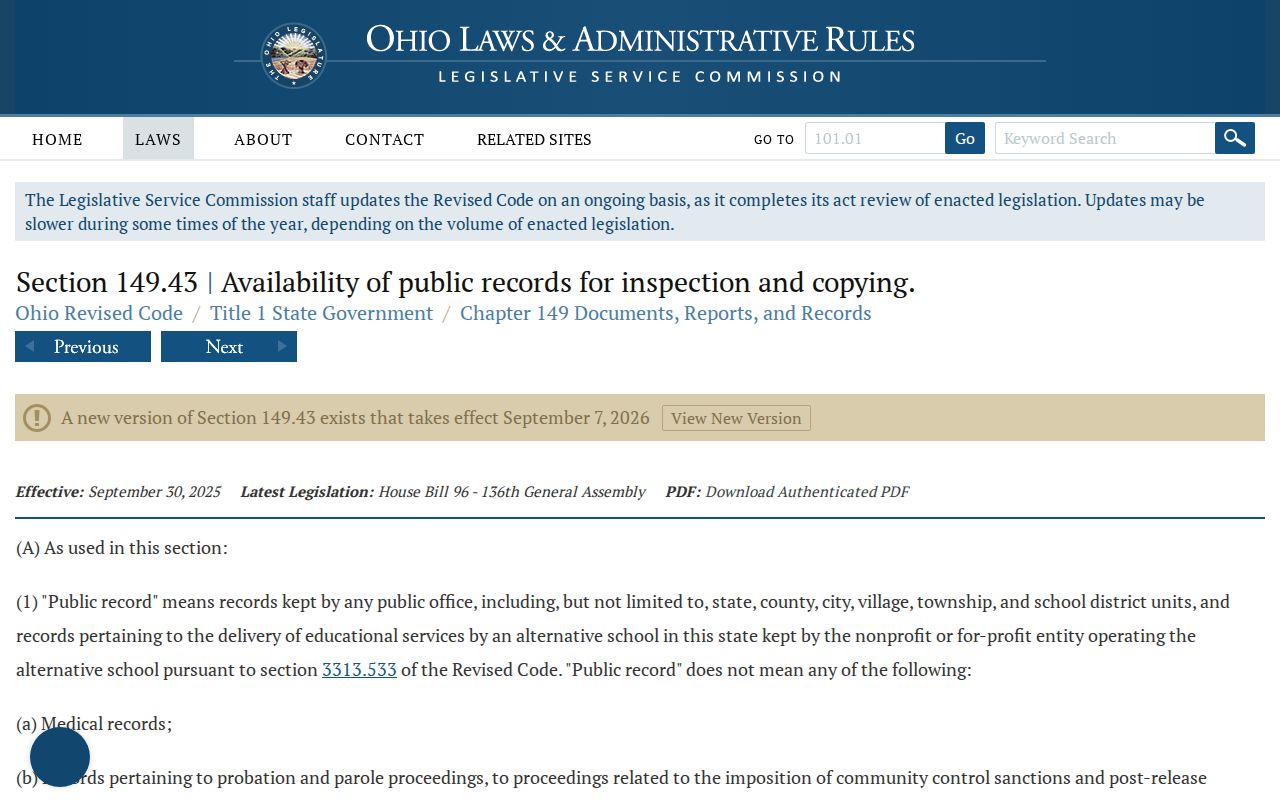
When a CivicWeb entry supplies a meeting date or ordinance number, include that identifier in the NextRequest follow-up.
Forest Park's former CivicWeb request page directs users to the current request route.
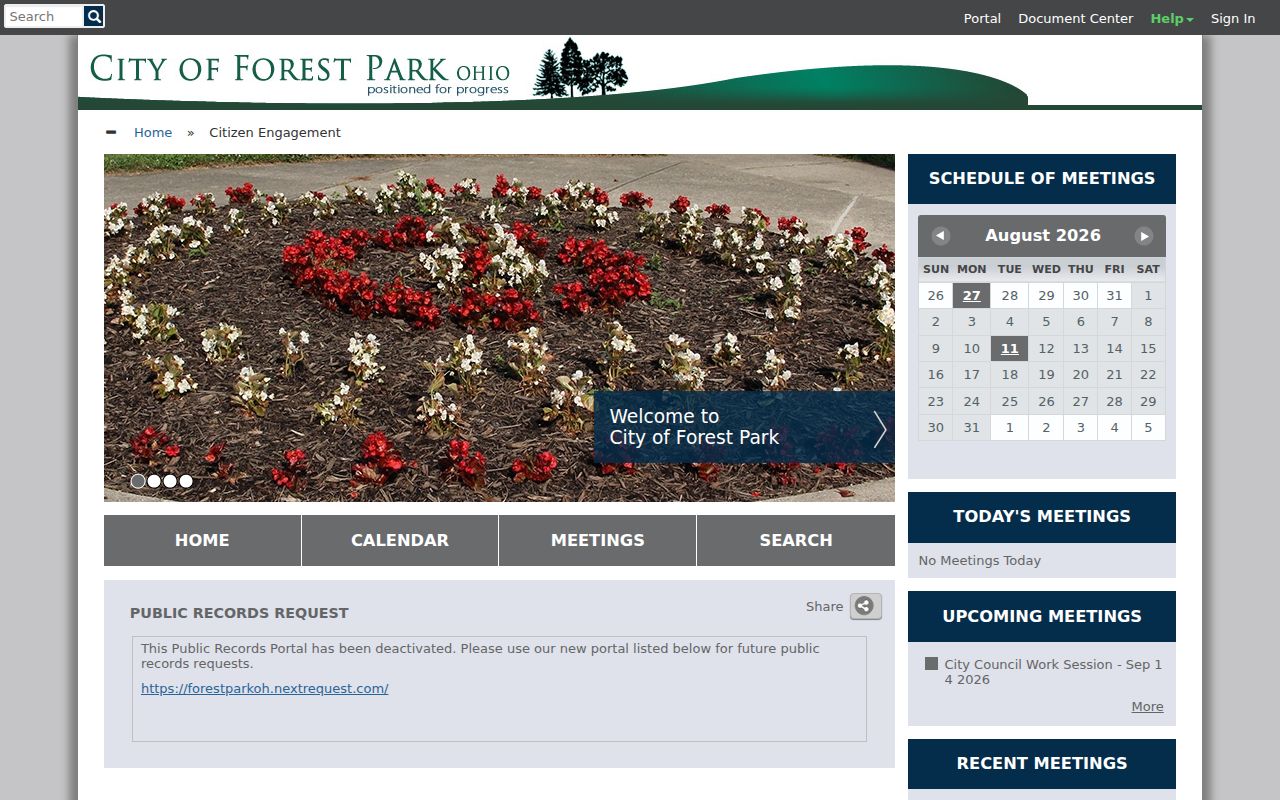
Use the published notice as an access update, not as evidence that a City document is a historical household record.
Forest Park Directory Boundaries
Historical research needs clear stopping points. Church and parish records can require the institution's permission and do not become public resident lists because a local congregation existed. Cemetery and obituary material can provide a burial, death, relative, organization, or date lead, but does not by itself establish a last residence. The same caution applies to early Cincinnati directories: the 1948 Williams volume is a sound example of directory method, yet it cannot be used as a negative search for a city whose first homes opened later.
Be alert to payment demands that use directory or deed language. The Federal Trade Commission fraud reporting route is available for suspected fraud. Before reporting, compare a claimed document number, parcel, recording date, fee, and office contact with the appropriate Recorder or Auditor source. Do not share private identifiers to verify an ordinary public record, and do not use historical material to stalk, harass, or harm anyone.
The FTC reporting form is for suspected fraud; the record-first check remains the actual custodian and its official index or counter.
For an uncertain historical identity, preserve the source and date, then ask the library or custodian for the narrower record rather than guessing from a common surname.